Webinar series on supporting students with intensive needs during the pandemic

The National Center on Intensive Intervention and the Center on Positive Behavioral Interventions and Supports have partnered to present a webinar series focused on providing educators with tools to support secondary students during virtual learning and the return to in-person learning. This series is intended for educators at the state and local level who work with students with intensive behavioral needs in secondary school settings.

Webinar series title: “Supporting Secondary Students with Intensive Needs during the Pandemic”

Webinar Details and Registration:

Webinar 1. Check and Connect: Implementation and Adaptation in a Virtual Environment Date: February 25, 2021 – 2:00-3:00 EST
Registration link: https://register.gotowebinar.com/register/7047557685027760911

Webinar 2. Early Warning Systems: Using Data to Plan for the 2021-2022 School Year Date: March 24, 2021 – 2:00-3:00 EDT
Registration link: https://register.gotowebinar.com/register/847522667512198156

Webinar 3. Intensive Intervention: Supporting Secondary Students with Intensive Behavior Needs Date: April, TBD

Registration link to come!


The contents of this website were developed under a grant from the U.S. Department of Education, #H325H140001. However, those contents do not necessarily represent the policy of the U.S. Department of Education, and you should not assume endorsement by the Federal Government. Project Officer, Celia Rosenquist.

OSEP logo

Collaborative Research Review Project Results in Publication Submission

Collaborative Research Review Project Results in Publication Submission

Collaborative Research Review Project Results in Publication Submission

By the time we headed to the Dairy Barn for ice cream on Saturday night, we were pretty much spent. But, after working all day for three days in a row, we had all but concluded our manuscript, which after a few more email exchanges and a bit more online collaboration, we have submitted for publication.

Our Collaborative Research Review Project (CRRP) had begun with a brief meeting at the NCLII All-Scholar Meeting in Minnesota in the fall of 2017. Participating scholars included Victoria Whaley (UCONN), Carlin Conner (SMU), Jennifer Stewart (SMU), and Britta Bresina (UMN). NCLII faculty Devin Kearns (UConn) would be our advisor, and he presented us an interesting research question: how do reading intervention programs teach morphology? He had previously conducted a related review, focused on teaching syllables and syllable division, but this particular question posed a new opportunity for us to grow in our own scholarship. We set an ambitious goal to have the review completed and a paper submitted in less than a year.

From that meeting forward, Devin led the team well. We collaboratively developed research questions. Each of us was assigned a particular aspect of the search for programs. Carlin Conner gathered program names from several online sites and a teacher survey from another study. Jennifer Stewart searched for online programs and apps. Britta Bresina conducted a search of the literature to identify researcher-developed programs. Victoria Whaley created a coding system for our research questions and began coding the programs we already had available.

Over the next several months, we met online, gathered and coded programs, and began to examine our data. With shared accountability, we advanced our research until we determined that the most efficient way to complete our double coding and writing would be to meet in person. In June 2018, we spent three days together at the University of Connecticut in what we affectionately dubbed “Writing Camp.” In that time, we completed double coding, inter-observer agreement calculations, drafted the paper, and completed a poster for presentation at the OSEP Project Director’s meeting.

Our collaboration on this project strengthened our professional relationships and skills as scholars. We will be better able to work together in the future and lead similar projects because of the opportunity our CRRP project provided. We are grateful to Devin for his leadership on this project and to NCLII for the funding and experience!

The contents of this website were developed under a grant from the U.S. Department of Education, #H325H140001. However, those contents do not necessarily represent the policy of the U.S. Department of Education, and you should not assume endorsement by the Federal Government. Project Officer, Celia Rosenquist.

OSEP logo

SPOTLIGHT on Cross-institutional Collaboration: Project FOCUS

SPOTLIGHT on Cross-institutional Collaboration: Project FOCUS

Project FOCUS is an IES-funded Goal 1 project that ultimately aims to help schools “focus” on implementing a key set of malleable variables (those that can be changed by the school) associated with reading outcomes. NCLII faculty member Stephanie Al Otaiba (SMU) is the Principal Investigator while Aki Kamata and NCLII faculty members Jill Allor and Paul Yovanoff serve as Co-PIs. NCLII faculty member Francesca Jones is also participating in this research. Other NCLII faculty who have consulted with Project FOCUS include Michael Coyne, Chris Lemons, Dan Maggin, Jessica Toste, and Jeannie Wanzek.

The project’s immediate goal is to learn which factors about Response to Intervention (RTI) or Multi-tiered Systems of Support (MTSS) implementation are associated with stronger reading outcomes for students in Tier 3 or for students receiving dyslexia services or special education services for reading disabilities. A strong rationale for Project FOCUS is growing concern in the field of special education that variable RTI implementation results in a diluted Tier 3 and less potent special education for students with the most intense needs.

Project FOCUS involves data collection across multiple sites in multiple states in partnership with NCLII, allowing for a variety of RTI models as well as geographic and socioeconomic locations to represent a range of school risk. The project is nearing the end of its second year of data collection. Collaboration with NCLII Scholars has been instrumental in ramping up Project FOCUS; these Scholars include Kristi Baker, Carlin Conner, Veronica Mellado De La Cruz, and Jennifer Stewart (SMU); Rachel Donegan (Vanderbilt); Katie Leonard and Tori Whaley (UConn); and Skip Kumm and Gina Braun (UIC).

Scholars have been involved in the process of interviewing RTI campus leaders, recruiting schools, conducting informational sessions with school staff, completing observations of reading lessons on-site, preparing video trainings, collecting staff surveys and school-wide reading data, coding data, and disseminating findings, among other tasks. These sources will be used to more closely consider factors related to challenges faced by schools, including RTI implementation and teachers’ knowledge of RTI implementation. 

The completion of Project FOCUS will result in a rich database that will allow for the design of feasible and promising interventions for students in order to improve professional development for teachers and to better understand school system supports that can help improve implementation of Tier 3 and special education. For more information, visit the website.

The contents of this website were developed under a grant from the U.S. Department of Education, #H325H140001. However, those contents do not necessarily represent the policy of the U.S. Department of Education, and you should not assume endorsement by the Federal Government. Project Officer, Celia Rosenquist.

OSEP logo

SPOTLIGHT: Faculty-Scholar Collaboration

SPOTLIGHT: Faculty-Scholar Collaboration

Professor Paul Yovanoff

NCLII Scholar Sarah Wilkinson

We are completing a cross-site collaboration to advance the findings from Project Intensity. The collaboration has two beneficial objectives. First, the data obtained through Project Intensity have not been thoroughly analyzed. Second, the collaboration will increase our methodological skill.

Project Intensity is an IES Intervention Development (Goal 2) grant that began in 2013 and is nearing completion. The reading intervention “Friends on the Block” is designed for students with intellectual disability. Findings are promising (Allor eta al, in review a; Allor et al, in review b;). The multiple baseline single-case research is a within-case (N=18) multiple baseline across reading levels design. The data structure includes baseline and intervention phases, with each case replicated across reading levels. Various design features offer an excellent opportunity for us to explore, (a) choice of effect-size indices, (b) choice of meta-analytic model, and (c) rescaling of the outcome measure.

Worth noting, for purposes of developing methodological skill, we are re-analyzing a second data set. Dr. Moira McKenna (a former advisee of Dr. Robert Horner at the University of Oregon) has generously offered her dissertation data for re-analysis. Moira’s 2006 dissertation (McKenna, 2006) research focused on the use of functional behavior analyses to improve reading outcomes. The data file is useful as a classic multiple baseline single-case study for modelling both case and intervention covariates. We will use current procedures to re-analyze Moira’s data.

Allor, J. H., Yovanoff, P., Al Otaiba, S., Ortiz, M. B., & Conner, C. (in review a). Literacy intervention for students with intellectual and developmental disabilities: A meta-analysis. Exceptional Children.

Allor, J. H., Gifford, D. B., Jones, F. G., Al Otaiba, S., Yovanoff, P., Ortiz, M. B., & Cheatham, J. P. (in review b). The effects of a text-centered literacy curriculum for students with intellectual disability. American Journal for Intellectual and Developmental Disabilities.

McKenna, M. (2006). The role of function-based academic and behavior support to improve reading achievement. (Doctoral Dissertation). Retrieved from Pro-Quest (3224106).

The contents of this website were developed under a grant from the U.S. Department of Education, #H325H140001. However, those contents do not necessarily represent the policy of the U.S. Department of Education, and you should not assume endorsement by the Federal Government. Project Officer, Celia Rosenquist.

OSEP logo

NCLII 2017 Fall Meeting

NCLII 2017 Fall Meeting

NCLII 2017 Fall Meeting

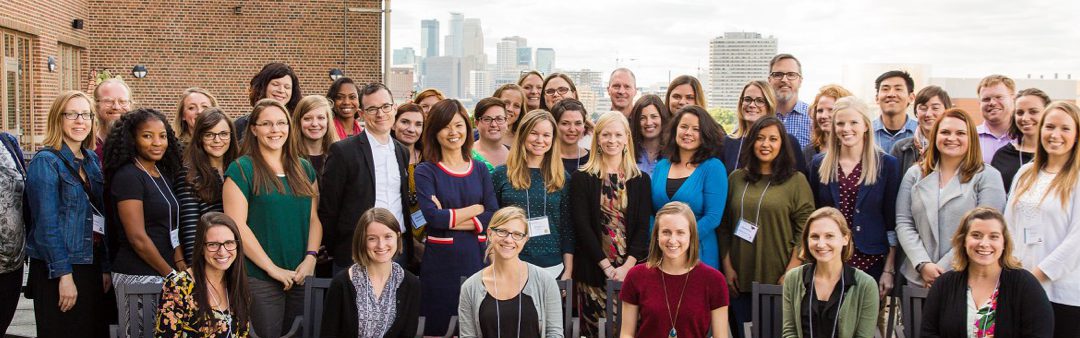
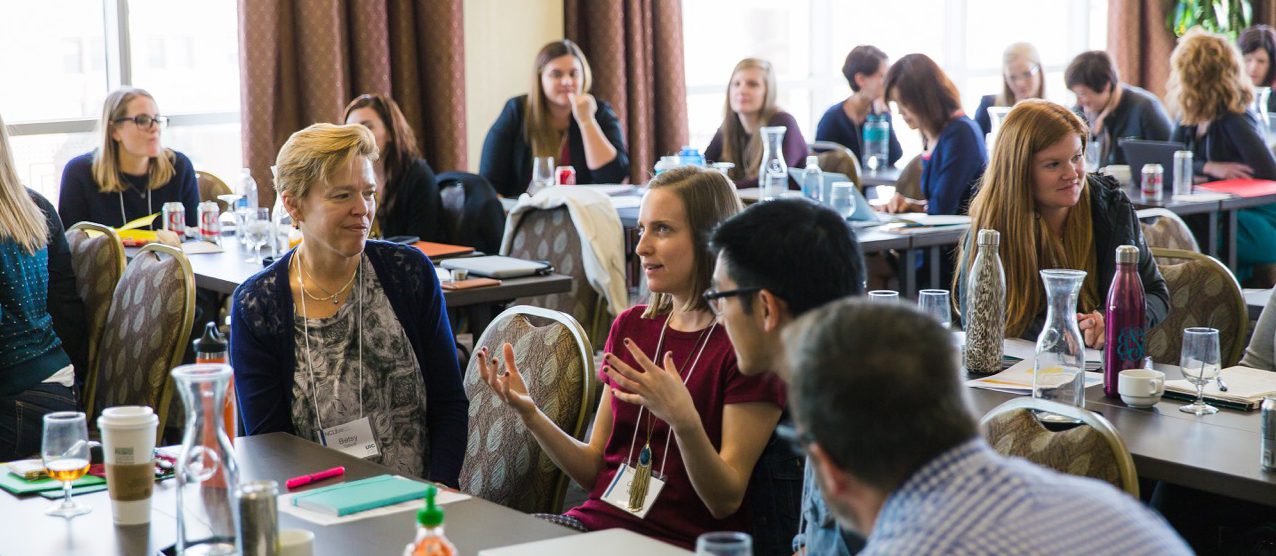
AT THE END OF SEPTEMBER, NCLII scholars and faculty gathered at the University of Minnesota for their annual fall meeting. Faculty and scholars shared updates on their current work and discussed issues related to evaluating the effects of intensive interventions. All shared in career development activities to prepare scholars for their future work as researchers and teachers within higher education departments of special education.

Friday’s meeting focused on evaluating effects of intensive interventions within and across different methodologies (e.g., single-case design and group design). NCLII 2017 Fall MeetingTough questions were addressed such as, Should effect sizes be used between and within single-case research designs? What are the best methods of evaluating effects of idiographic research in order to generalize results? The group was fortunate to hear University of Minnesota professors Dr. Gerry August and Dr. Tim Piehler present their research focused on using SMART designs to adapt interventions. Scholars then had an opportunity to apply their learning by engaging in cross-institutional groups to design and create their own SMART designs. Following a short coffee break, small groups of scholars met with faculty to ask questions and seek professional advice. At the end of the day, the group gathered at the oldest restaurant in Minneapolis for a meal and camaraderie.
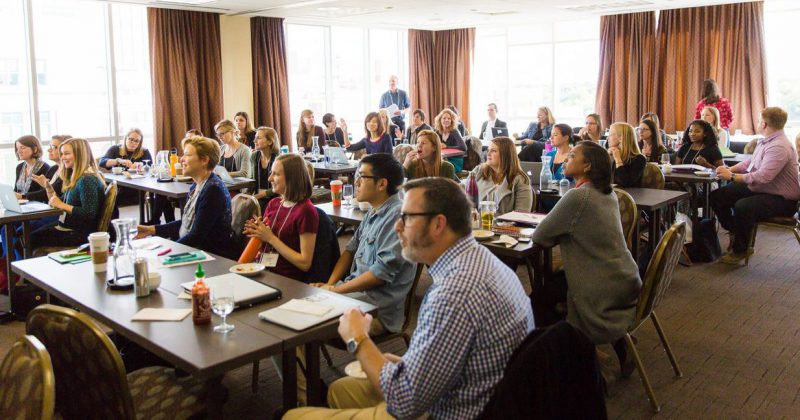
On Saturday, Cohort 1 scholars (currently in their third year of the program) shared their current research through poster presentations. The various topics included mathematics interventions, intensifying reading comprehension instruction, teacher self-efficacy influences on student outcomes, peer-mediated intervention in early childhood settings, and intensive interventions within juvenile justice centers. The knowledge they shared in their research process and findings with fellow scholars and faculty made for stronger connections and new collaborative opportunities.
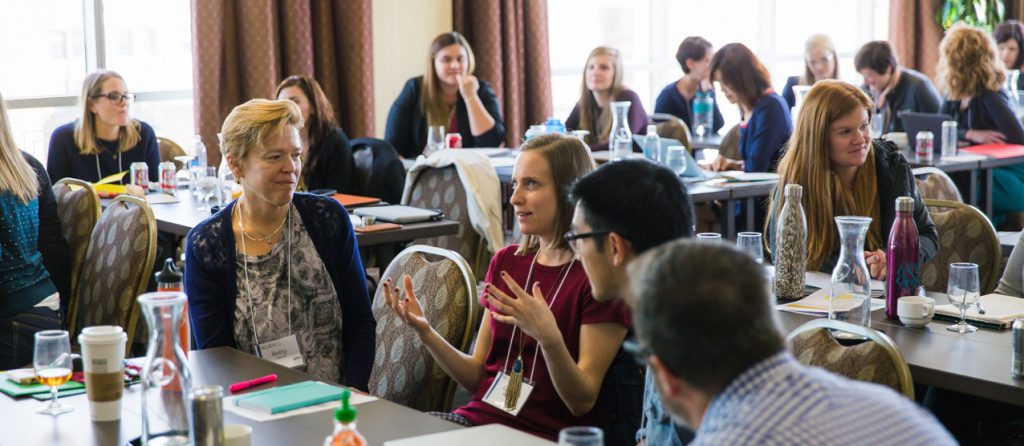
Faculty scholar working group

Cohort 2 scholars also shared their research to the large group in brief, 5-minute “data blitz” presentations. They practiced effectively communicating the “big ideas” of their research and fielding questions from faculty.

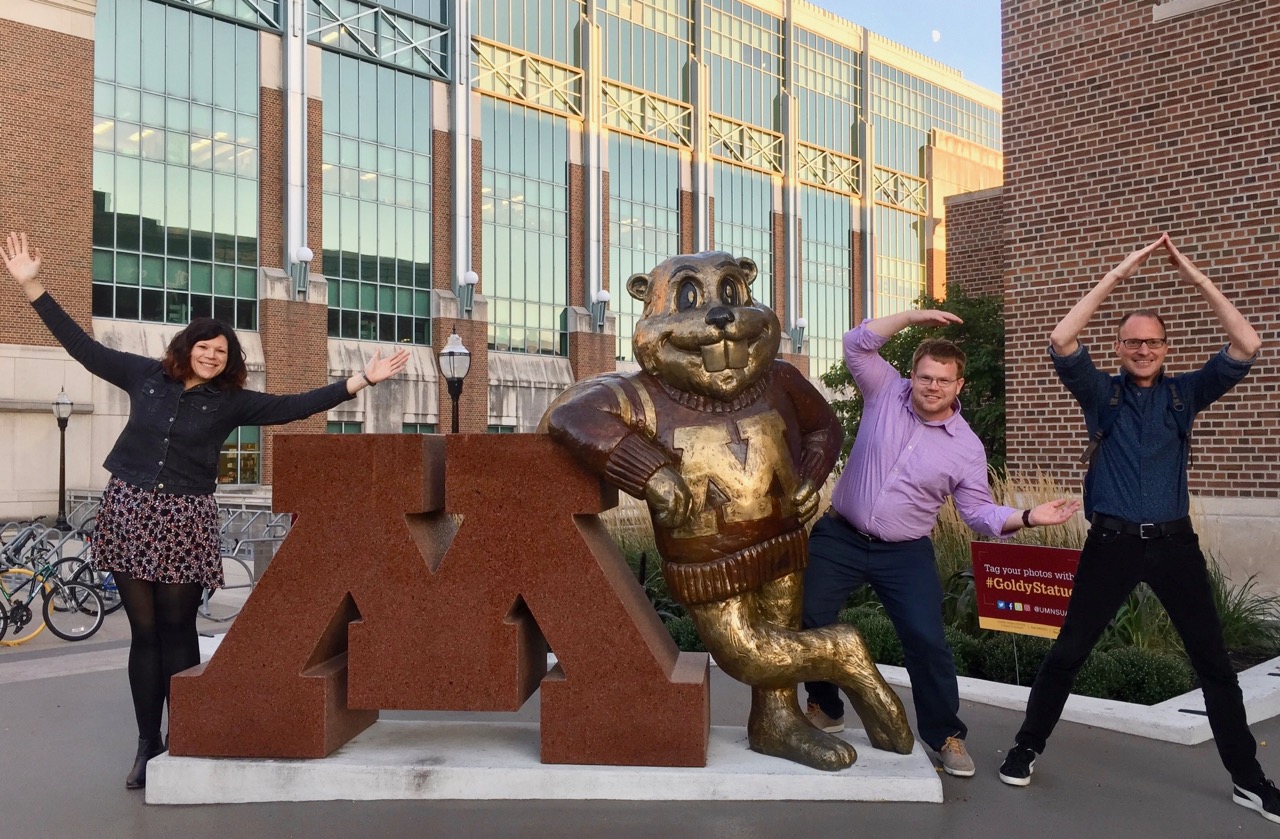
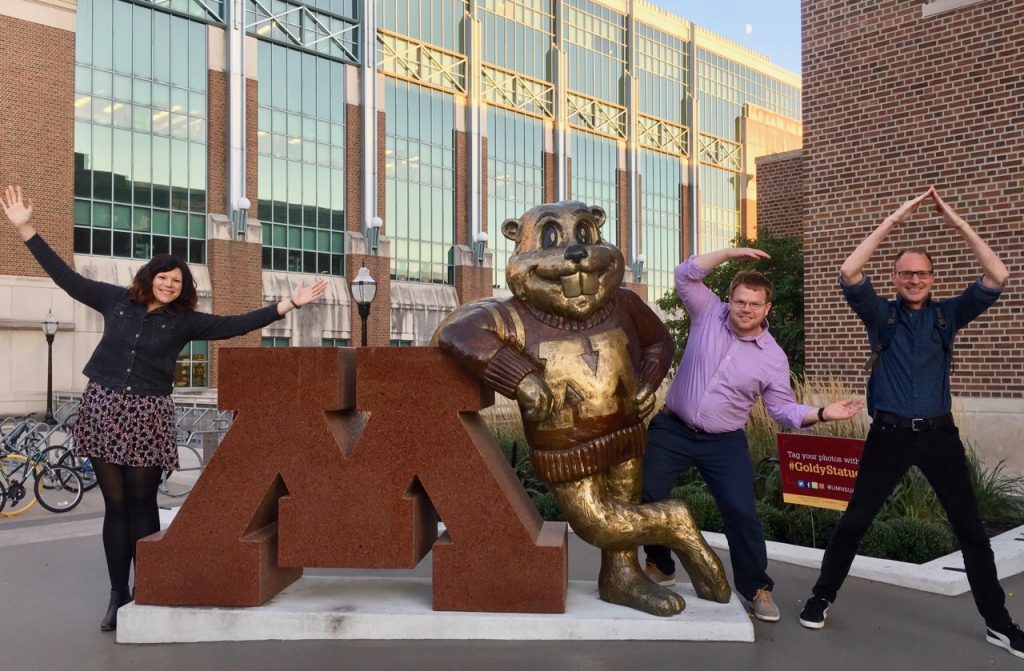
On a lighter note, scholars and faculty participated in the “Gopher Challenge” to see who could capture the best photo with the University of Minnesota’s cherished mascot, Goldie the Gopher. Photos were shared with the group on Saturday, and everyone cast their vote for their favorite. Congrats to Chris Lemons, Skip Kumm, and Jessica Toste for their award-winning photo!

Faculty reported being impressed with the growth they are seeing in the scholars – both in the quality of their work and in their professional abilities in communicating and presenting. Also, several of the Cohort 1 scholars reported having an even greater understanding of the value-added of the consortium model as they are moving into their third year of study. Faculty also had some good discussions about the focus of the fourth-year curriculum. All in all, scholars and faculty shared that they thoroughly enjoyed the weekend and the opportunity to meet in person to build stronger connections and learn from one another.
The contents of this website were developed under a grant from the U.S. Department of Education, #H325H140001. However, those contents do not necessarily represent the policy of the U.S. Department of Education, and you should not assume endorsement by the Federal Government. Project Officer, Celia Rosenquist.

OSEP logo